
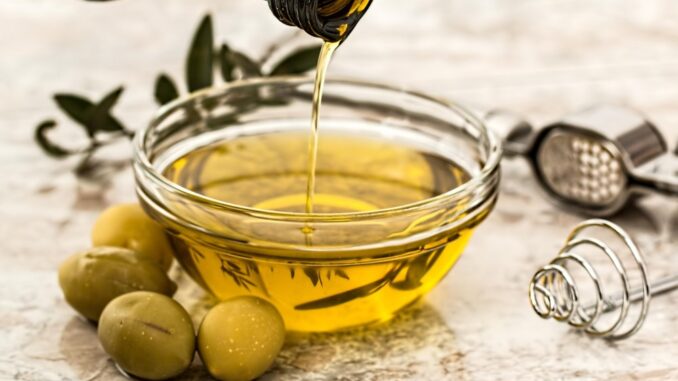
SACRAMENTO, CA – California olive oil producers are expanding into a growing U.S. market, but imported product remains the industry’s biggest competitive challenge, according to Terrain analyst Matt Woolf.
California now has about 27,000 acres of oil olives compared with 12,000 acres of table olives. USDA data show olive oil represented about 80% of processed olive volume in 2022, reversing the industry’s historic emphasis on table olives.
Demand has helped drive that shift. U.S. olive oil consumption has more than doubled since 2000, while California growers benefit from lower water use and less pest pressure than many other specialty crops.
Modern high-density and super-high-density orchards also allow mechanical harvesting, helping reduce production costs. Terrain says global prices remain elevated after drought reduced European output, and recent heat could tighten supplies again.
Imports remain the largest obstacle. The United States sources roughly 95% to 98% of its olive oil from overseas, leaving California producers reliant on quality, freshness, traceability and proximity to consumers to build market share.
Farm-Level Takeaway: California olive growers have expanding demand opportunities, but competing with lower-cost imports requires emphasizing quality, efficiency and market differentiation.