
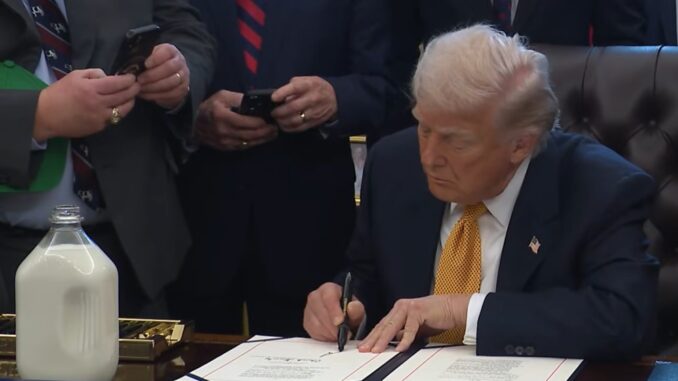
WASHINGTON, DC – Farmers, ranchers, and rural communities are facing significant losses from natural disasters, and today, President Donald Trump sent a supplemental funding request to the Hill that includes more than $11 billion to support the domestic agriculture industry.
The White House is asking Congress for more than $11 billion in additional farm assistance, including new economic support for 2026 row and specialty crop producers and disaster aid tied to Southeast freeze losses.
A White House official says the supplemental request includes $10 billion for temporary economic assistance for row and specialty crops planted in crop year 2026. Another $1.1 billion would support agricultural producers recovering from freeze losses caused by severe winter storms in the Southeast.
The request comes on top of the $12 billion that USDA is delivering through the Farmer Bridge Assistance Program, as well as existing farm bill support programs, crop insurance, and permanent disaster programs. The administration says current funding is expected to provide farmers with an estimated $30.5 billion in financial assistance during calendar year 2026.
The official explains that the amount equals roughly 20 percent of projected net farm income, and that an additional $10 billion is needed to address targeted losses in some parts of agriculture that are not fully covered by existing programs.
For producers, the key point is that the White House acknowledges that crop insurance, permanent disaster aid, and earlier bridge payments may not cover every loss. The row-crop and specialty-crop language also gives the request a wider reach than a single-commodity payment program.
The $1.1 billion disaster piece is aimed at freeze losses in the Southeast. The administration says the funding would follow recent congressional practice of providing additional support when crop insurance and standing USDA programs do not fully cover the impacts of hurricanes, freezes, and other major disasters.
The request also lands as farm groups and lawmakers debate a new farm bill, higher input costs, trade access, disaster coverage, and the long-term structure of farm safety-net programs. The administration is framing agricultural security as part of national security, arguing that producers must be able to withstand weather, market, and global disruptions.
The White House also points to recent tax and trade actions as part of its broader farm policy, including full expensing for farm machinery, equipment, and structures; changes affecting farmland sales; a higher estate and gift tax exemption; and expanded market access for U.S. agricultural exports.
The supplemental request still requires congressional action. If approved, it would add another major layer of federal support for producers facing weak margins, weather losses, and uneven market conditions in 2026.
Farm-Level Takeaway: Producers should track this request closely, as it could add new 2026-crop support and targeted disaster aid beyond existing USDA programs