
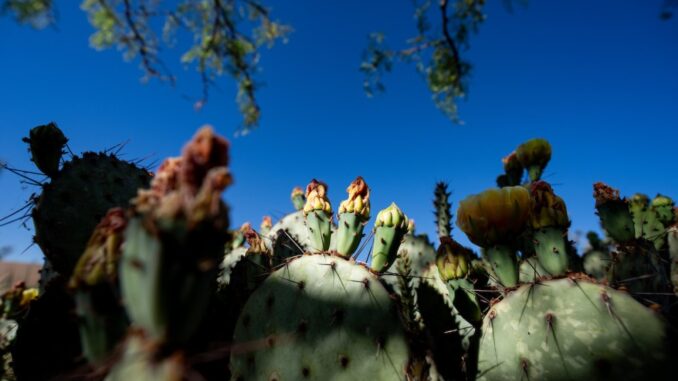
COLLEGE STATION, TX – Texas A&M AgriLife researchers are studying whether prickly pear cactus could become a commercial crop for food ingredients and renewable fuels, offering a possible option for drought-prone regions where traditional crops face increasing water stress.
The plant is highly drought-resistant, can grow on marginal land, and produces substantial biomass. Researchers are testing uses ranging from cactus flour and beverages to chemical building blocks for renewable fuels, including sustainable aviation fuel.
For growers, the appeal is resilience. Prickly pear can continue producing under difficult conditions, potentially creating value from acres that may be less suitable for conventional crops during dry years.
Major hurdles remain. Researchers say a commercial processing plant could require tens of thousands of acres, and the supply chain connecting growers, processors and food companies is still being developed.
The team is now establishing test plots, evaluating production systems and exploring grower cooperatives and market partnerships to determine whether prickly pear can move from an underused plant to a viable agricultural enterprise.
Farm-Level Takeaway: Prickly pear could offer drought-prone regions a new crop opportunity, but commercial markets and processing infrastructure still need to develop.