
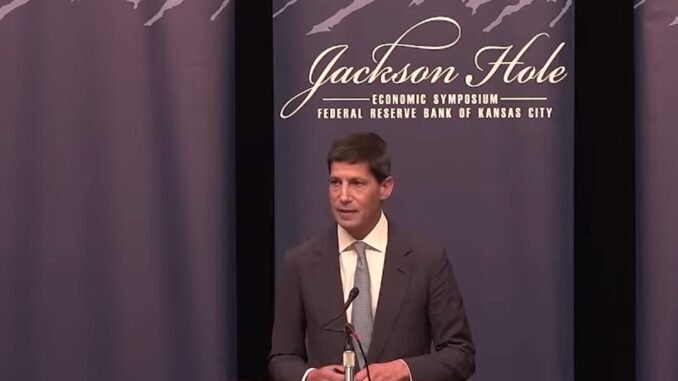
JACKSON HOLE, WY – Federal Reserve Chair Kevin Warsh says agriculture is among the sectors showing economic strain even as the broader U.S. economy remains comparatively resilient, giving national recognition to financial pressure already evident across many farming regions.
Speaking Friday at the Jackson Hole Economic Policy Symposium, Warsh grouped agriculture with housing as sectors under stress. He contrasted that weakness with healthy consumer spending, continued investment and a national unemployment rate of 4.1%.
Recent Kansas City Federal Reserve data support that concern. Farm income and agricultural credit conditions continued to deteriorate during the second quarter, with smaller farms and operations relying heavily on rented land reporting comparatively weaker financial conditions.
Conditions remain uneven. Strong cattle prices have supported ranching areas, while narrow crop margins, elevated production costs, and tighter credit continue to pressure row-crop producers and agriculture-dependent communities.
Warsh did not characterize agriculture as being in recession, but his acknowledgment places farm-sector weakness inside the Federal Reserve’s broader economic and interest-rate debate.
Farm-Level Takeaway: The Federal Reserve’s recognition of agricultural strain reinforces concerns that farm-dependent rural economies are operating very differently than stronger national economic indicators suggest.